
In this article
- 5G NR preserves and enhances existing LPWAN technologies like NB-IoT and LTE-M rather than replacing them
- The 5G core network provides improved efficiency and reduced power consumption for IoT devices
- NB-IoT remains the dominant cellular LPWAN solution for massive IoT deployments requiring low-power connectivity
- 5G RedCap bridges the gap between traditional LPWAN and higher-bandwidth cellular connectivity
- Battery life improvements and enhanced network coverage make 5G LPWAN suitable for industrial applications
- Migration from 4G to 5G networks enables better support for diverse IoT use cases and deployment scenarios
- 5G Network Architecture Impact on LPWAN
- NB-IoT Evolution Within 5G Networks
- Cellular Connectivity Enhancements for IoT Devices
- Power Consumption and Battery Life Improvements
- Deployment Scenarios and Use Cases
- LPWAN Technologies Comparison in 5G Era
5G Network Architecture Impact on LPWAN
The 5G core network brings basic changes that make LPWAN work better. Existing IoT devices don't need hardware changes. The standalone 5G core handles packets better and reduces extra signaling compared to the old 4G system. This change directly helps apps that need on-and-off connectivity and long periods of device sleep. Network slicing in 5G lets operators create special virtual networks. These are made for specific IoT uses. LPWAN apps get network slices set up to save power over speed. This gives better support for massive IoT deployments. These special network parts can handle thousands of IoT devices in one cell. They keep the low-power features needed for battery sensors. The 5G new radio interface works with existing LPWAN protocols. It also adds better spectral efficiency. NB-IoT and LTE-M protocols work in the same frequency bands. But they get better signal processing and interference management. This means organizations can use their current cellular IoT investments while getting better network performance.Core Network Optimization
The 5G core uses service-based architecture. This separates control plane and user plane functions. This separation handles IoT traffic patterns better. This helps apps like asset tracking and environmental monitoring. These create small amounts of data at irregular times. The network can optimize routing and processing for these traffic types. This reduces the overall power needed to stay connected. Control and user plane separation also enables edge computing. This brings data processing closer to IoT devices. This closeness reduces delays. It can also reduce the amount of data devices need to send to remote servers. This further extends battery life for low-power apps.NB-IoT Evolution Within 5G Networks
NB-IoT stays the main technology for massive IoT apps in 5G networks. It keeps its position as the preferred cellular LPWAN solution. This is for apps needing minimal data rates and extended battery life. Adding narrowband IoT to 5G infrastructure keeps the basic features that make it good for IoT apps. It also adds performance improvements. The 5G version of NB-IoT supports higher device density per cell. This lets network operators connect more IoT devices in the same coverage area. This capability meets the growing demand for large-scale IoT deployments. This includes smart cities and industrial environments where thousands of sensors need connectivity in a small area. Better discontinuous reception (eDRX) and power saving mode (PSM) features in 5G NB-IoT extend battery life beyond what 4G could do. Devices can stay dormant for long periods while staying registered on the network. This enables battery life measured in years instead of months for many IoT apps.Performance Improvements
The 5G network version of NB-IoT reduces latency for time-sensitive apps. It keeps the low-power features needed for battery devices. Control plane optimization enables faster connection setup and data transmission. This especially helps apps that need periodic reporting or emergency alerts. Multi-carrier support in NB-IoT networks lets devices access extra frequency resources during busy network times. This capability ensures reliable connectivity even when many IoT devices compete for network resources at the same time.Cellular Connectivity Enhancements for IoT Devices

Network Resilience and Reliability
5G networks use advanced beamforming and antenna technologies. These improve signal quality and reduce interference for IoT devices. These improvements are especially valuable for industrial IoT apps. In these environments, electromagnetic interference from machinery and other equipment can affect wireless communication reliability. Multi-access edge computing integration in cellular networks enables local data processing. This reduces dependency on remote server connectivity for certain IoT apps. This distributed architecture improves system resilience. It can also reduce power consumption by minimizing data transmission needs.Power Consumption and Battery Life Improvements
Power consumption optimization is one of the biggest benefits that 5G NR brings to LPWAN apps. The better power saving mechanisms let IoT devices achieve battery life improvements of 20-30% compared to similar 4G implementations. This extends operational periods from years to decades for certain low-power apps. The 5G system uses more efficient signaling procedures. These reduce the energy needed for network attachment and periodic updates. These optimizations especially benefit apps like utility metering and environmental sensing. These devices need to keep network connectivity while minimizing power consumption over long periods. Better sleep mode capabilities let IoT devices enter deeper power-saving states while keeping network synchronization. The cellular network can buffer incoming data and deliver it when devices periodically wake up. This enables apps that need infrequent data exchange to operate with minimal power consumption.Battery Life Extension Techniques
The combination of NB-IoT and LTE-M protocols in 5G networks gives developers multiple options. They can optimize power consumption based on specific app requirements. Apps like smart meters benefit from the ultra-low power characteristics of NB-IoT. Asset tracking apps can leverage LTE-M's mobility support with acceptable power consumption. Better discontinuous reception cycles in 5G networks allow devices to remain unreachable for long periods while keeping network registration. This capability enables battery life measured in decades for apps that only need to transmit data monthly or less often.Deployment Scenarios and Use Cases
Adding LPWAN technologies to 5G networks expands the range of viable deployment scenarios and use cases for cellular IoT apps. Industrial IoT implementations benefit from the improved reliability and coverage characteristics. They also keep the low-power operation essential for widespread sensor deployments. Smart agriculture apps leverage the better coverage capabilities to connect devices in rural areas. These areas had unreliable cellular network coverage before. The improved signal penetration enables connectivity for soil sensors, irrigation controllers, and livestock tracking devices across large agricultural areas. Urban IoT deployment scenarios benefit from the increased device density support in 5G networks. Smart city apps can deploy thousands of sensors for air quality monitoring, traffic management, and infrastructure monitoring in dense urban environments. This doesn't overwhelm the cellular network capacity.Massive IoT Applications
The massive IoT capabilities of 5G networks support deployment scenarios involving hundreds of thousands of connected devices in one geographic area. These large-scale deployments require careful planning to optimize network resources. They also need to ensure reliable connectivity for all devices. Apps that require low data rates but need to connect numerous devices benefit from the better scalability of 5G LPWAN networks. Examples include building automation systems, environmental monitoring networks, and industrial sensor deployments. Individual devices transmit small amounts of data but the overall connectivity requirements are substantial.LPWAN Technologies Comparison in 5G Era
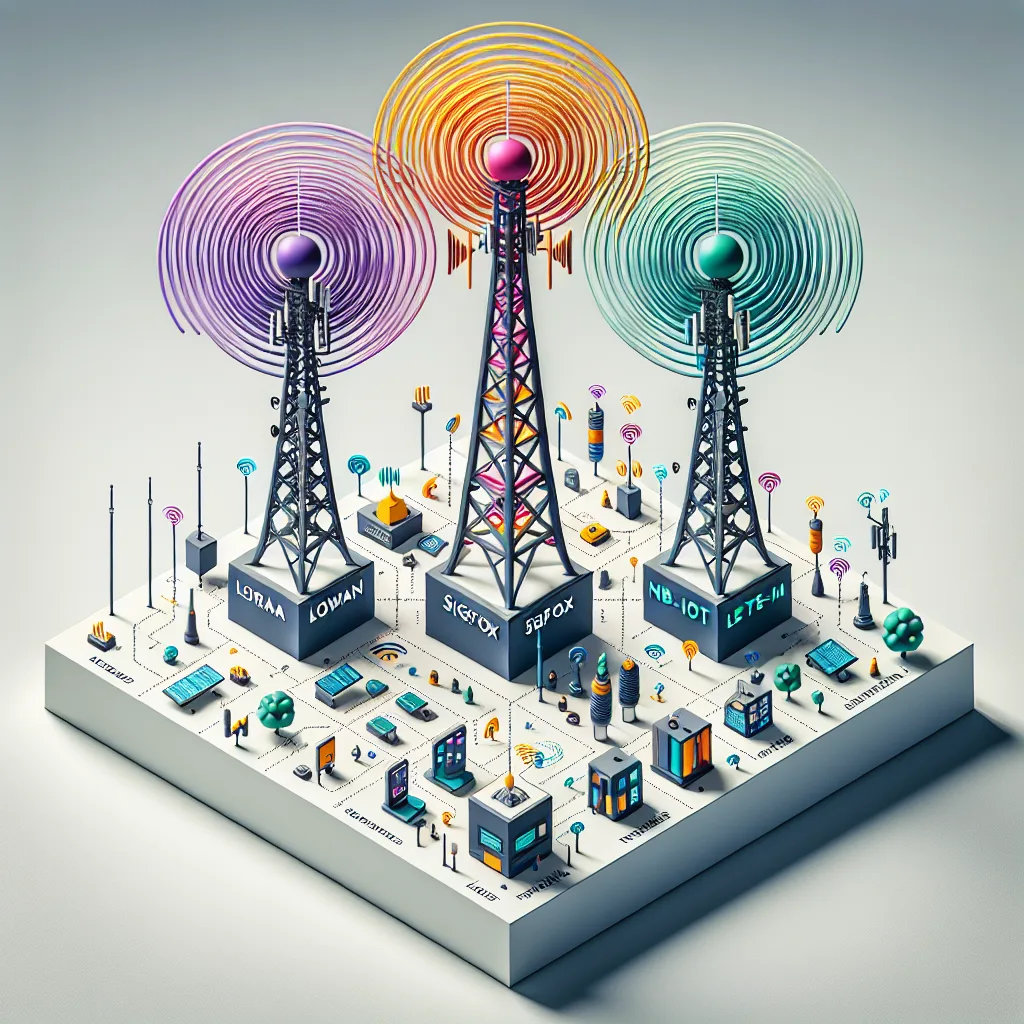
Technology Selection Criteria
The choice between different LPWAN technologies depends on several factors. These include required battery life, data rate requirements, coverage area, and cost considerations. Apps like utility metering favor cellular options for their reliability and widespread coverage. Apps in remote areas may require non-cellular alternatives. Power consumption characteristics vary significantly between different LPWAN technologies. This influences their suitability for specific apps. The low-power wide-area network options in 5G provide industry-leading power efficiency. This is for apps that prioritize battery life over data transmission capabilities.Industrial Applications Drive 5G IoT Adoption
Adding 5G and IoT creates opportunities for industrial automation and smart manufacturing. Next-generation IoT platforms leverage 5G cellular networks to support real-time monitoring of critical infrastructure. Millisecond response times determine operational success. These 5G services enable manufacturers to deploy thousands of sensors across production facilities. This creates dense networks that traditional cellular technologies cannot efficiently support. Private 5G networks address the specific requirements of IoT deployments in industrial environments. They offer dedicated spectrum and enhanced security controls. Manufacturing facilities can now implement 5G IoT devices that monitor equipment health. They track inventory movement and optimize energy consumption in real-time. The number of IoT devices per facility often exceeds 10,000 sensors. This makes scalable connectivity architecture essential for operational efficiency.LPWAN Technologies Evolve Within 5G Framework
While LTE-M and NB-IoT established the foundation for cellular LPWAN, 5G and LPWAN integration represents a significant technological advancement. 5G supports enhanced coverage for remote asset monitoring and agricultural apps where traditional cellular coverage remains limited. The iot ecosystem benefits from 5G's network slicing capabilities. These allocate specific bandwidth and latency parameters for different application types. NB-IoT is designed to operate in 5G networks. It maintains backward compatibility while gaining access to improved network management features. IoT and M2M apps that previously relied on legacy cellular networks can now meet 5G performance standards. They don't need complete infrastructure replacement. This evolutionary approach reduces deployment costs while expanding the capabilities of existing iot connections. The convergence of iot technologies in 5G mobile networks creates new possibilities for smart city deployments and environmental monitoring systems. 5G internet connectivity enables real-time data processing at network edges. This reduces latency for time-sensitive apps like traffic management and emergency response systems. These deployments demonstrate how 5G IoT transforms urban infrastructure management through better connectivity and processing capabilities. The arrival of 5G NR represents a basic shift in how we approach cellular iot technologies. It moves beyond basic iot connectivity to support sophisticated internet of things apps. This version of 5g introduces specialized protocols and network slicing capabilities. These address diverse iot requirements across industrial sectors. While 5g offers enhanced bandwidth and ultra-low latency, LPWAN technologies continue to serve apps such as smart metering where power efficiency trumps speed. Critical iot apps now benefit from the enhanced 5g capabilities that enable real-time processing and mission-critical reliability standards. 5G deployment must consider existing LPWAN infrastructure investments. Many organizations operate hybrid networks combining both technologies. LPWAN iot solutions remain optimal for basic monitoring tasks. Implementing 5g becomes essential for iot apps that require immediate response times and high data throughput.Network Coexistence in Industrial Environments
Industrial operators increasingly deploy networks designed for iot that leverage both 5G NR and LPWAN protocols in the same facility. This hybrid approach allows iot devices connected to LPWAN networks to handle routine monitoring. 5g reduced latency connections support time-sensitive automation processes. The integration strategy recognizes that different iot apps and services demand tailored connectivity solutions rather than a one-size-fits-all approach.Future-Proofing IoT Infrastructure
Planning for 5g requires understanding which iot devices that require continuous connectivity will benefit most from cellular upgrades versus LPWAN optimization. Organizations must evaluate their portfolio of iot apps. They need to determine optimal technology allocation based on data volume, latency sensitivity, and power consumption requirements. While 5g provides advanced capabilities, LPWAN technologies continue evolving. They serve the majority of current IoT deployment scenarios more cost-effectively.Power Efficiency Comparisons Across LPWAN Technologies
When evaluating battery life across LPWAN options, NB-IoT outperforms traditional cellular technologies. But it still trails behind LoRaWAN in ultra-low power scenarios. The protocol optimizations in 5G NR bring significant improvements to power consumption. They use enhanced sleep modes and reduced signaling overhead. Industrial deployments especially benefit from these efficiency gains when devices need to operate for years without battery replacement. 5G infrastructure introduces advanced scheduling algorithms. These minimize unnecessary wake-up cycles for IoT devices. Network slicing capabilities allow operators to create dedicated low-power channels. These are specifically optimized for LPWAN traffic patterns. These improvements translate directly to extended device lifespans and reduced maintenance costs across large-scale deployments.Coverage and Penetration Advantages
5G NR's enhanced coverage capabilities address one of LPWAN's most critical requirements: reliable connectivity in challenging environments. The improved signal propagation characteristics enable better penetration through building materials and underground installations. This enhanced reach makes 5G-based LPWAN solutions viable for apps previously limited to unlicensed spectrum technologies. Edge computing integration in 5G networks reduces latency for time-sensitive IoT apps. It maintains the low-power characteristics essential for LPWAN devices. Local data processing capabilities minimize the need for constant cloud communication. This further extends battery life and improves response times for industrial automation scenarios.Frequently Asked Questions
How does 5G NR affect existing NB-IoT deployments?
5G NR maintains full backward compatibility with existing NB-IoT devices. This allows current deployments to continue operating while benefiting from improved network efficiency. The cellular network infrastructure enhancements reduce power consumption and extend battery life for connected IoT devices. No hardware modifications are needed.
What are the main advantages of 5G LPWAN over 4G implementations?
5G LPWAN networks provide improved power consumption characteristics, enhanced coverage, and support for higher device density compared to 4G networks. The 5G core network architecture enables more efficient handling of IoT traffic patterns. It reduces signaling overhead for low power wide area apps.
Can IoT devices seamlessly transition between 4G and 5G networks?
Modern cellular IoT devices support dual-mode operation. This enables automatic switching between 4G and 5G networks based on availability and signal quality. This capability ensures continuous connectivity during the gradual migration from LTE network infrastructure to 5G deployment scenarios.
How does 5G support massive IoT deployments?
5G networks support massive IoT through enhanced device density capabilities, network slicing for dedicated IoT traffic, and improved spectral efficiency. These enhancements enable operators to connect thousands of IoT devices in a single cell. They maintain the low-power characteristics required for battery-operated apps.
What is the impact on battery life for IoT devices in 5G networks?
IoT devices operating in 5G networks typically achieve 20-30% better battery life compared to equivalent 4G implementations. Enhanced power saving modes and more efficient signaling procedures enable apps that require extended operational periods with minimal power consumption. Battery life can be measured in decades.
Do organizations need to replace existing LPWAN infrastructure for 5G?
Organizations do not need to replace existing LPWAN infrastructure when networks upgrade to 5G. The cellular network maintains support for NB-IoT and LTE-M protocols. It provides enhanced performance through improved network architecture and optimized resource management.
How does 5G IoT differ from current cellular IoT solutions?
5G IoT provides significantly higher device density support. It handles up to one million iot connections per square kilometer compared to 4G's limitations. The technology enables new iot and m2m apps that require ultra-low latency. These include autonomous vehicle coordination and industrial robotics. 5G networks also offer enhanced power efficiency for battery-operated devices through advanced sleep mode algorithms.
Can existing LTE-M and NB-IoT devices work with 5G networks?
Yes, LTE-M and NB-IoT devices maintain full compatibility with 5G networks through spectrum sharing and network slicing technologies. This backward compatibility protects existing investments while enabling gradual migration to next-generation iot capabilities. The iot ecosystem benefits from this seamless transition. Operators can upgrade infrastructure without replacing deployed sensors and devices.
What are the key requirements of IoT that 5G addresses better than previous technologies?
5G supports the three critical requirements of iot: massive device connectivity, ultra-reliable low-latency communication, and enhanced mobile broadband for data-intensive apps. Private 5g networks address security and reliability concerns that enterprises face when deploying large-scale sensor networks. The combination of 5g cellular infrastructure and advanced iot technologies enables apps like real-time predictive maintenance and autonomous system coordination.
How do 5G services impact the total cost of ownership for IoT deployments?
5G services reduce operational costs through network slicing. This allows operators to optimize resources for specific iot apps rather than over-provisioning bandwidth. The improved spectral efficiency of 5g mobile networks supports more 5g iot devices per cell tower. This reduces infrastructure costs per connection. Energy efficiency improvements in 5g and iot integration extend battery life for remote sensors. This reduces maintenance requirements and operational expenses.
How does 5G NR impact existing LPWAN deployments?
5G NR complements rather than replaces LPWAN technologies. Each serves different iot requirements in industrial networks. While 5g offers high-speed connectivity for critical iot apps, LPWAN continues to excel for basic iot monitoring tasks that prioritize battery life over bandwidth. Organizations typically implement hybrid architectures that leverage both technologies based on specific app demands.
Which IoT applications benefit most from 5G versus LPWAN?
Critical iot apps requiring real-time response benefit from 5g optimized for ultra-low latency. These include industrial automation and autonomous systems. Internet of things apps focused on periodic data collection, environmental monitoring, and asset tracking remain well-suited to LPWAN technologies. The choice depends on balancing performance requirements against power consumption and deployment costs.
What does implementing 5G mean for LPWAN IoT strategy?
Implementing 5g creates opportunities to enhance existing lpwan iot deployments through network orchestration and edge computing integration. 5g capabilities enable centralized management of iot devices connected across multiple network types. This improves overall system efficiency. Organizations can maintain their LPWAN investments while strategically adding 5G connectivity for iot apps that require higher performance characteristics.
How do 5G capabilities align with current IoT deployment realities?
While 5g provides transformative capabilities for industrial connectivity, 5g deployment must consider existing infrastructure and specific iot apps and services requirements. Many current deployments achieve their objectives through cellular iot technologies optimized for power efficiency rather than speed. The key lies in matching network technology to app needs rather than pursuing universal 5G adoption.
How does power consumption compare between 5G NR and existing LPWAN technologies?
5G NR implementations offer significantly improved power efficiency compared to previous cellular generations. They approach the ultra-low consumption levels of LoRaWAN and Sigfox. Advanced sleep modes and optimized signaling protocols reduce energy consumption by up to 90% during idle periods. However, NB-IoT requires more power than these unlicensed alternatives when frequent data transmission is required.
What coverage improvements does 5G NR provide for LPWAN applications?
5G NR delivers enhanced signal penetration and extended range capabilities that surpass traditional LPWAN technologies in challenging environments. The improved link budget enables reliable connectivity through multiple building floors and in underground installations. These coverage enhancements make 5G infrastructure particularly valuable for smart city apps and industrial monitoring in dense urban environments.
Can existing LPWAN devices work with 5G networks without hardware changes?
Most current LPWAN devices require hardware modifications or complete replacement to access 5G capabilities. While NB-IoT maintains better compatibility with 5G infrastructure than other LPWAN protocols, legacy devices typically need firmware updates at minimum. The transition to 5G-enabled LPWAN devices offers significant benefits in terms of performance and efficiency. This justifies the upgrade costs for many industrial apps.
How does network slicing in 5G benefit LPWAN deployments?
Network slicing allows operators to create dedicated virtual networks optimized specifically for LPWAN traffic characteristics and requirements. These isolated network segments provide guaranteed quality of service and customized protocols. These enhance both reliability and power efficiency. 5G slicing capabilities enable operators to offer differentiated LPWAN services while maintaining the ultra-low costs essential for massive IoT deployments.
The transition to 5G NR represents an evolution rather than a revolution for LPWAN technologies and IoT connectivity. Organizations can maintain their existing cellular IoT investments while gaining access to enhanced network capabilities. These improve power consumption, coverage, and device density support. Successful IoT deployment in the 5G era requires understanding how these architectural improvements enhance existing LPWAN technologies rather than replacing them entirely. Smart deployment strategies leverage both continuity and enhancement to maximize the value of IoT connectivity investments while preparing for future scalability requirements.Related Articles
Satellite IoT Connectivity: M2M Beyond Cellular Coverage
Satellite IoT connectivity changes how m2m communication works. It extends IoT devices beyond regular network limits. When cellular coverage fails in re...
Wi-Fi vs Cellular for IoT: When to Use Each
Choosing between wi-fi vs cellular for iot when to use each option is a critical decision. It impacts deployment success, operating costs, and device pe...
RFID Technology in M2M: How It Works
RFID technology in M2M systems changes how machines communicate and exchange data. Radio frequency identification enables automated tracking and data co...