
In this article
- Hybrid IoT systems mix LoRaWAN and cellular to give better results for different projects
- LoRaWAN works great for low-power, small data tasks while cellular gives more bandwidth and global coverage
- Choosing the right gateways and network design is key for successful hybrid setups
- Cost savings come from mixing LoRaWAN's lower running costs with cellular's reliable infrastructure
- Industrial IoT, smart cities, and asset tracking work best with hybrid approaches
- Security systems and data sending methods need careful planning across both technologies
Companies know that no single connection type meets every IoT need. LoRaWAN gives great low-power performance for sensor networks. Cellular provides strong, wide-area coverage for critical applications.
When these communication technologies work together, they create better IoT solutions that cost less and work more reliably. Smart cities use hybrid networks to manage parking sensors and emergency response systems. Industrial sites use both systems to monitor equipment while keeping cellular backup for critical alerts.
Knowing when and how to mix these technologies determines if a project succeeds. This hybrid approach gives maximum coverage, uses less power, and cuts operating costs across many different uses.
- Understanding LoRaWAN Fundamentals
- Cellular IoT Technologies
- Hybrid Network Architecture Design
- Connectivity Optimization Strategies
- Deployment Scenarios and Use Cases
- Security and Data Transmission
- Cost Analysis and Scalability
- Integration Challenges and Solutions
Understanding LoRaWAN Fundamentals
LoRaWAN works as a low power wide area network protocol. It was made specifically for IoT devices that need very little power. The technology sends small data packets over long distances using free spectrum bands. LoRa modulation lets devices talk up to 15 kilometers in rural areas and several kilometers in cities.
The LoRaWAN network has end devices, gateways, network servers, and application servers. End devices talk to multiple gateways at once. This creates natural backup. One LoRaWAN gateway can serve thousands of devices in its coverage area. This makes it very cost-effective for large sensor deployments.
Key LoRaWAN Characteristics
Battery life can last up to 10 years for many LoRaWAN devices. This happens because they use extremely little power. The protocol supports adaptive data rate features. This means it automatically makes transmission settings better based on link conditions. Security features include AES-128 encryption at both network and application layers.
Data rates range from 0.3 to 50 kbps. This is enough for most sensor applications but limits high-bandwidth needs. This constraint makes combining LoRaWAN with cellular technologies attractive for complete IoT solutions.
Cellular IoT Technologies
Cellular connectivity provides coverage everywhere through existing mobile network infrastructure. NB-IoT and LTE-M are the main cellular IoT technologies. Each one is optimized for different application needs. These networks offer guaranteed quality of service, unlike unlicensed spectrum alternatives.
NB-IoT delivers exceptional coverage. It can reach deep into buildings and underground locations where other wireless technologies fail. The cellular network handles millions of devices per cell tower. This supports massive IoT deployments across smart cities and industrial applications.
Cellular IoT Advantages
Global roaming capabilities enable asset tracking applications across international borders. Cellular connections provide higher data rates than LoRaWAN. They support applications that need real-time communication or larger data payloads. Network reliability reaches carrier-grade standards with built-in redundancy and professional maintenance.
However, cellular connectivity involves ongoing subscription costs and higher power use compared to LPWAN alternatives. This trade-off requires careful evaluation when designing hybrid architectures.
Hybrid Network Architecture Design
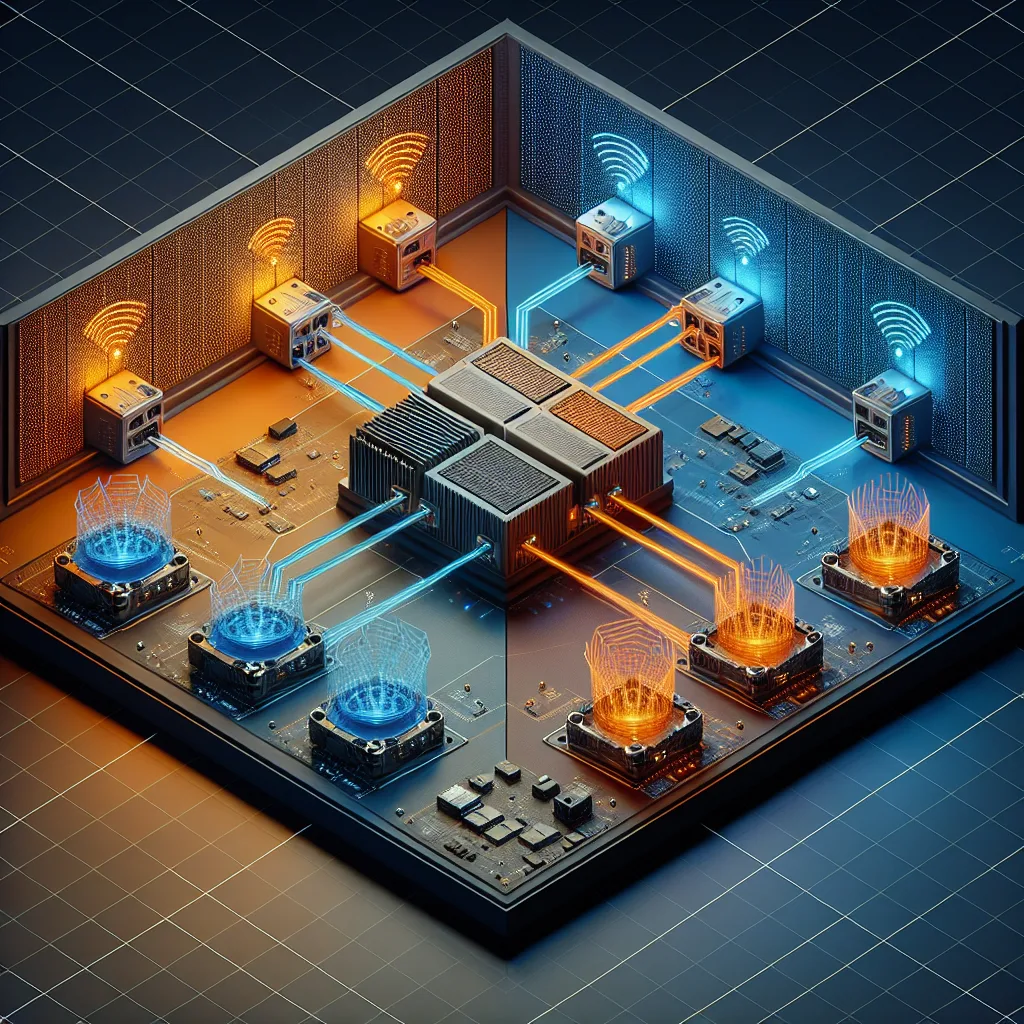
Hybrid networks combine multiple communication technologies in one IoT deployment. The architecture typically uses LoRaWAN for routine sensor data collection. It reserves cellular for critical alerts, firmware updates, or high-priority data transmission.
Gateway placement becomes crucial in hybrid implementations. Dual-technology gateways can handle both LoRaWAN and cellular communications. This reduces infrastructure costs. Edge computing capabilities at gateway level enable local data processing. They also allow intelligent protocol selection based on message priority or network conditions.
Network Topology Considerations
Star-of-stars topology works well for hybrid deployments. Sensors connect to local LoRaWAN gateways that maintain cellular backup connectivity. This approach minimizes cellular data usage while ensuring reliability for mission-critical applications.
Mesh networking elements can enhance coverage in challenging RF environments. Wi-Fi integration provides additional connectivity options for devices requiring higher bandwidth in specific locations.
Connectivity Optimization Strategies
Smart connectivity selection optimizes network performance and operating costs. Devices can choose between LoRaWAN and cellular based on data urgency, battery levels, or network availability. This adaptive approach maximizes the strengths of each technology.
Protocol switching algorithms evaluate factors including message size, transmission frequency, and power consumption targets. Low data rate, routine telemetry uses LoRaWAN to preserve battery life. Emergency alerts or large file transfers trigger cellular connectivity for guaranteed delivery.
Power Management
Low-power design principles apply differently across hybrid architectures. LoRaWAN devices achieve multi-year battery life through careful power management and transmission scheduling. Cellular modules require more sophisticated power management. They often incorporate sleep modes and wake-on-demand functionality.
Duty cycle optimization balances data freshness requirements with battery conservation. Sensors can adjust reporting intervals based on environmental conditions or system demands.
Deployment Scenarios and Use Cases
Asset tracking applications show effective hybrid IoT implementations. Routine location updates use LoRaWAN to minimize operating costs and power use. Geofence violations or theft alerts immediately trigger cellular transmission for rapid response.
Smart cities deploy hybrid networks for complete municipal management. Parking sensors, waste bin monitors, and environmental sensors operate on LoRaWAN networks. Emergency services, traffic management, and public safety systems require cellular reliability and coverage guarantees.
Industrial IoT Applications
Manufacturing facilities combine both technologies for complete monitoring. Routine equipment telemetry flows through LoRaWAN networks to minimize costs. Critical alarms, predictive maintenance notifications, and safety systems use cellular connectivity to ensure immediate delivery.
Agricultural deployments leverage LoRaWAN for widespread sensor coverage across large areas. Irrigation controls and livestock tracking systems benefit from cellular backup connectivity during critical growing seasons.
Security and Data Transmission
Security protocols must address both LoRaWAN and cellular communication paths. End-to-end encryption ensures data integrity across protocol boundaries. Application-layer security provides consistent protection regardless of underlying connectivity method.
Key management becomes complex in hybrid deployments. Devices require secure storage for multiple protocol credentials while maintaining efficient power consumption profiles.
Data Handling Strategies
Data aggregation at gateway level reduces cellular transmission costs while maintaining LoRaWAN efficiency. Time-series data from multiple sensors can be bundled and transmitted via cellular during scheduled upload windows.
Edge computing enables local data processing and filtering. Only processed insights or anomalies require transmission to cloud platforms. This optimizes bandwidth usage across both network types.
Cost Analysis and Scalability
Hybrid architectures optimize total cost of ownership through strategic technology allocation. LoRaWAN reduces ongoing operating expenses for high-volume sensor deployments. Cellular connectivity addresses specific requirements where LoRaWAN limitations impact functionality.
Scalability benefits emerge as deployment size increases. Large sensor networks achieve cost advantages through LoRaWAN while maintaining cellular backup for critical functions. Gateway infrastructure scales efficiently to support thousands of devices per location.
Financial Modeling
Cost optimization requires analysis of device costs, network infrastructure, and ongoing operating expenses. LoRaWAN networks eliminate recurring connectivity fees but require gateway infrastructure investment. Cellular IoT involves device subscriptions but leverages existing network infrastructure.
Return on investment calculations must consider deployment lifespan, device replacement cycles, and network maintenance requirements across both technologies.
Integration Challenges and Solutions
Protocol integration complexity increases with hybrid implementations. Device firmware must handle multiple radio modules and communication stacks while maintaining low-power operation. Gateway software requires sophisticated routing and failover logic.
Network management platforms need unified visibility across both LoRaWAN and cellular devices. Integration APIs enable seamless data flow between different network backends and application platforms.
Technical Implementation
Antenna design affects performance in dual-radio devices. Proper RF isolation prevents interference between LoRaWAN and cellular modules operating simultaneously. PCB layout considerations minimize power consumption and maximize signal integrity.
Wireless communication reliability improves through redundant connectivity options. Automatic failover mechanisms ensure continuous operation even when one network type experiences outages or interference.
Strategic Network Selection for Device Deployment
Successful hybrid architectures require careful planning to determine which devices connect through each iot network component. Static sensors measuring environmental conditions typically leverage the LoRa network for long-range, low-power communication. Mobile assets requiring real-time tracking utilize cellular connectivity. This strategic device allocation ensures optimal performance across the entire scalable iot infrastructure.
Network operators play a crucial role in hybrid deployments. They offer flexible data plans that work with both LoRaWAN and cellular IoT requirements. Organizations can optimize costs by routing high-frequency sensor data through LoRaWAN. They reserve cellular connections for critical alerts that must transmit data immediately. The integration of LoRaWAN with cellular networks creates redundant pathways that enhance system reliability.
Implementation Challenges and Solutions
Complex IoT deployments often require multiple network protocols beyond just these two technologies. This includes narrowband IoT for specific use cases and Bluetooth Low Energy for local device communication. Integrating LoRaWAN with cellular networks demands careful consideration of gateway placement and coverage overlap to ensure seamless connectivity. The growing number of devices in enterprise deployments needs scalable IoT networks that can adapt to changing requirements without infrastructure overhauls.
Modern IoT products increasingly support LoRa and cellular connectivity within single hardware platforms. This simplifies deployment logistics for organizations managing diverse IoT use cases. These dual-mode devices automatically select the optimal connection method to transmit data to the cloud. They base decisions on signal strength, battery levels, and message priority. Cellular and LoRaWAN hybrid architectures provide the flexibility needed for complete industrial monitoring and automation systems.
Optimizing Gateway Deployments for Hybrid Networks
Successful gateway deployments in hybrid IoT environments require strategic positioning. This maximizes both LoRaWAN coverage and cellular backup capabilities. Network planners must consider signal propagation patterns, power consumption profiles, and maintenance accessibility when determining optimal gateway locations. The adoption of hybrid architectures enables organizations to create redundant communication paths. These ensure continuous connectivity even when one protocol experiences interference or outages.
Modern hybrid systems leverage multiple communication protocols simultaneously. This allows devices to switch between LoRaWAN and cellular based on real-time conditions and application requirements. This approach eliminates the limitations of relying on a single communication protocol. This is particularly important in environments where coverage varies significantly across different geographical areas. Organizations can configure devices to use LoRaWAN as the primary communication channel for routine data transmission. They automatically fail over to cellular when long-range communication becomes compromised.
The integration of different communication technologies within a unified infrastructure provides superior flexibility. This beats traditional single-protocol deployments. Hybrid communication infrastructure supports both low-power sensor networks and high-bandwidth applications. It uses intelligent protocol selection based on data priority and transmission requirements. When comparing lorawan vs cellular capabilities, the hybrid approach captures the best attributes of each technology while reducing their individual limitations.
Implementing Bidirectional Communication Strategies
Effective bidirectional communication in hybrid IoT networks requires careful coordination between LoRaWAN and cellular protocols. This prevents message conflicts and ensures reliable acknowledgments. Network architects must implement intelligent routing algorithms. These determine the most appropriate communication channel for both uplink sensor data and downlink control commands. This dual-path approach significantly improves message delivery rates and reduces latency for critical applications that require immediate response confirmation.
Frequently Asked Questions
What makes hybrid IoT architectures combining LoRaWAN and cellular effective?
Hybrid architectures use the strengths of both technologies. LoRaWAN provides low-power, cost-effective connectivity for routine sensor data. Cellular ensures reliable, high-priority data transmission. This combination optimizes power use, network coverage, and operating costs across diverse IoT applications.
When should organizations deploy hybrid LoRaWAN and cellular networks?
Hybrid deployment makes sense when applications require both low-power, high-volume sensor connectivity and reliable, wide-area coverage for critical communications. Asset tracking, smart cities, and industrial IoT applications benefit most from this approach. This is especially true when dealing with mixed device types and varying connectivity requirements.
How do hybrid networks handle gateway selection and protocol switching?
Smart gateway systems manage protocol selection based on message priority, power consumption targets, and network availability. Devices can choose LoRaWAN for routine telemetry and cellular for urgent alerts. Edge computing at the gateway level enables local decision-making and data processing.
What are the security implications of combining LoRaWAN and cellular connectivity?
Security requires end-to-end encryption across both communication paths. Devices must securely store multiple protocol credentials while maintaining power efficiency. Application-layer security provides consistent protection regardless of the underlying wireless communication method used for data transmission.
How does power consumption compare between hybrid and single-technology deployments?
Hybrid architectures optimize power use by using low-power LoRaWAN for routine operations. They activate cellular only when necessary. This selective approach extends battery life compared to cellular-only deployments. It also provides reliability benefits over LoRaWAN-only implementations.
What integration challenges exist when combining these communication technologies?
Integration complexity includes managing dual-radio devices, coordinating different network protocols, and ensuring reliable data transmission across protocol boundaries. Network management platforms require unified visibility. Antenna design must prevent RF interference between LoRaWAN and cellular modules operating simultaneously.
How do hybrid architectures handle device management across multiple network types?
Hybrid systems use centralized management platforms that coordinate devices across both cellular and LoRaWAN connections. This enables unified device provisioning and monitoring. These platforms automatically route data to the cloud through the most appropriate network. They base decisions on device location, battery status, and message urgency. Organizations gain complete visibility into their multiple network infrastructure through single management interfaces.
What factors determine whether to use LoRaWAN or cellular for specific IoT applications?
Device power requirements, message frequency, and geographic coverage determine the optimal network choice for different IoT use cases. Battery-powered sensors that report infrequently benefit from LoRaWAN's ultra-low power consumption. Applications requiring guaranteed delivery or real-time responses need cellular connectivity. Network operators often provide guidance on data plans that optimize costs across both technologies.
Can existing IoT deployments be upgraded to hybrid architectures?
Organizations can extend existing single-network deployments by adding complementary connectivity options. They don't need to replace current infrastructure. Legacy LoRa network deployments can integrate cellular gateways for critical data paths. Cellular-only systems can add LoRaWAN coverage for battery-powered devices. This incremental approach creates scalable IoT networks that grow with business requirements while protecting existing investments.
How do hybrid architectures compare to other IoT connectivity solutions?
Hybrid lorawan and cellular iot systems provide superior flexibility compared to single-technology approaches or alternatives like narrowband iot alone. The combination addresses a broader range of IoT products and use cases than any individual wireless technology can support effectively. Organizations achieve better cost optimization and reliability through this dual-network approach than relying on single connectivity solutions.
How do gateway deployments differ in hybrid IoT networks compared to single-protocol implementations?
Gateway deployments in hybrid networks require more sophisticated planning. They must support multiple communication protocols simultaneously within the same communication infrastructure. Unlike single-protocol gateways, hybrid gateways need additional processing power and memory. This helps them manage protocol switching, routing decisions, and maintaining separate communication channels for LoRaWAN and cellular connections. This complexity increases deployment costs but provides significantly better network reliability and coverage.
What factors drive the adoption of hybrid IoT architectures over traditional approaches?
The adoption of hybrid architectures stems from the need to overcome the limitations of using different communication technologies in isolation. This is particularly important in challenging deployment environments. Organizations choose hybrid solutions when they require both the low-power, long-range communication benefits of LoRaWAN and the widespread coverage of cellular networks. This approach ensures continuous connectivity regardless of environmental conditions or infrastructure availability.
How does bidirectional communication work when multiple protocols are involved?
Bidirectional communication in hybrid systems uses intelligent routing to select the optimal communication channel for each message type and direction. The system automatically chooses between LoRaWAN and cellular based on factors like message urgency, data size, and network availability. This ensures that both uplink sensor data and downlink commands reach their destinations reliably. This dual-path approach provides redundancy that single communication protocol systems cannot match.
What are the key considerations when comparing LoRaWAN vs cellular for hybrid implementations?
When evaluating lorawan vs cellular for hybrid deployments, organizations must consider power consumption profiles, coverage requirements, and data transmission patterns. LoRaWAN excels at low-power, periodic sensor readings across long distances. Cellular provides reliable, high-bandwidth communication infrastructure for time-sensitive applications. The optimal hybrid solution balances these different communication strengths to meet specific application requirements while maintaining cost-effectiveness.
Hybrid IoT architectures combining LoRaWAN and cellular represent a strategic approach to modern connectivity challenges. Organizations achieve optimal deployment outcomes by leveraging each technology's strengths while reducing individual limitations. Success depends on careful architecture design, intelligent protocol selection, and thorough understanding of application requirements. Choose hybrid connectivity solutions that maximize operational benefit rather than limiting deployments to single technologies.
Related Articles
Digital Twins and M2M: Creating Virtual Replicas of Physical Assets
How to Build an M2M Data Pipeline: From Sensor to Dashboard
Building an IoT data pipeline for M2M communication requires establishing a strong streaming pipeline architecture. This forms the foundation of your en...
Multi-Protocol Gateways for M2M Communication
Industrial automation leaders like Mitsubishi and Omron have embraced multi-protocol gateway technology. They use it to bridge legacy systems with moder...