
In this article
Key Takeaways
- M2M SIM cards are built for machine-to-machine communication and IoT applications, unlike regular consumer SIM cards made for mobile phones
- M2M SIMs last longer, resist extreme temperatures better, and work in harsh conditions compared to standard smartphone SIM cards
- Global connectivity, flexible data plans, and smart routing make M2M SIMs perfect for industrial IoT projects across many countries
- Security features in M2M SIMs include better encryption and tamper detection to protect important machine data
- Form factors for M2M SIMs include embedded solutions that go directly into device hardware for permanent use
- Cost structures and billing models for M2M connectivity work very differently from consumer mobile plans
Table of Contents
- Understanding M2M SIM Cards
- Key Differences Between M2M and Regular SIMs
- Durability and Environmental Resistance
- Connectivity and Global Coverage
- M2M SIM Form Factors
- Security Features in M2M SIMs
- Cost and Billing Considerations
- IoT Applications for M2M SIMs
Understanding M2M SIM Cards
An M2M SIM card is a special cellular connectivity solution. It is built for machine-to-machine communication rather than human-operated devices. These SIM cards let IoT devices send data automatically without manual help. They support everything from industrial sensors to connected vehicles. M2M SIMs have specific technical features. These make them different from regular SIM cards. They work in wider temperature ranges, typically from -40°C to +105°C. Consumer SIM cards work within narrower temperature limits. This expanded range ensures reliable connectivity in harsh industrial environments. Standard SIM cards would fail in these conditions. M2M SIMs have better memory capacity and processing power. They handle complex IoT protocols and data transmission patterns. Consumer SIM cards are optimized for voice calls and text messaging. M2M SIMs focus on data connectivity and network efficiency for automated communications.Technical Architecture
M2M SIMs use special firmware designed for unattended operation. This firmware includes advanced power management features. These optimize battery life in IoT devices. They also have automatic network selection algorithms for global deployments. Enhanced error correction protocols ensure reliable data transmission. The embedded sim technology in many M2M applications removes the need for removable SIM cards entirely. These permanently integrated solutions reduce failure points. They enable manufacturers to create smaller, more robust IoT devices.Key Differences Between M2M and Regular SIMs
Performance Requirements
M2M SIMs support different performance metrics compared to standard sim cards. Latency requirements vary depending on the IoT device. A smart meter may tolerate several seconds of delay. An autonomous vehicle requires millisecond response times. Regular SIM cards optimize for human perception of network performance. They focus on download speeds and call quality. The key difference between m2m sim and normal sim lies in their network prioritization. M2M SIMs often use dedicated network slices or lower-priority traffic routing to reduce costs. Consumer SIM cards receive priority access to network resources during peak usage periods.Durability and Environmental Resistance
M2M SIMs are built to withstand environmental conditions that would destroy regular sim cards. Industrial IoT deployments often place devices in locations with extreme temperatures, humidity, vibration, and corrosive substances. M2M SIMs use specialized materials and construction techniques. These ensure reliable operation under these challenging conditions. Temperature resistance stands as a primary differentiator. Consumer SIM cards operate reliably between 0°C and 60°C. M2M SIMs maintain functionality across extended ranges. This capability enables deployment in applications like smart meters. These are installed in outdoor utility enclosures. GPS trackers are mounted on vehicles operating in extreme climates. Vibration resistance addresses the mechanical stress that IoT devices experience in industrial applications. M2M SIMs use reinforced contact points and flexible mounting systems. These prevent connection failures in high-vibration environments like construction equipment or manufacturing machinery.Longevity Engineering
Using M2M SIMs in long-term deployments requires specialized engineering for component longevity. M2M SIMs use industrial-grade memory chips. These are rated for millions of write cycles. Consumer-grade components in regular SIM cards are not as durable. This enhanced durability prevents data corruption during extended operational periods. Chemical resistance protects M2M SIMs from environmental exposure. This could damage standard SIM cards. Protective coatings and sealed enclosures prevent corrosion from salt air, industrial chemicals, and other aggressive substances. These are encountered in IoT deployments.Connectivity and Global Coverage
Global M2M connectivity requirements drive significant differences in SIM card design and network partnerships. IoT devices frequently operate across multiple countries and network operators. They require SIM cards that can automatically connect to available networks without manual configuration. M2M SIMs support multi-IMSI technology. This allows a single SIM card to maintain multiple network identities for seamless roaming across different carrier networks. This capability eliminates the need for separate SIM cards in different countries. It reduces operational complexity for global IoT deployments. Steered routing represents another key advantage of M2M connectivity. Network operators can direct M2M traffic through optimized paths. This reduces latency and improves reliability for specific IoT applications. This traffic management capability is not typically available with consumer SIM cards.Network Optimization
IoT connectivity benefits from specialized network features that regular SIM cards cannot access. M2M SIMs support network slicing. This allows operators to create dedicated virtual networks optimized for specific IoT use cases. These sliced networks can provide guaranteed bandwidth, reduced latency, or enhanced security based on application requirements. Data plan flexibility in M2M SIMs accommodates the diverse connectivity needs of different IoT devices. Some devices require always-on connectivity with predictable data usage. Others operate with sporadic bursts of data transmission. M2M data plans can be customized to match these varying requirements. Standardized consumer plans cannot do this.M2M SIM Form Factors
Integration Considerations
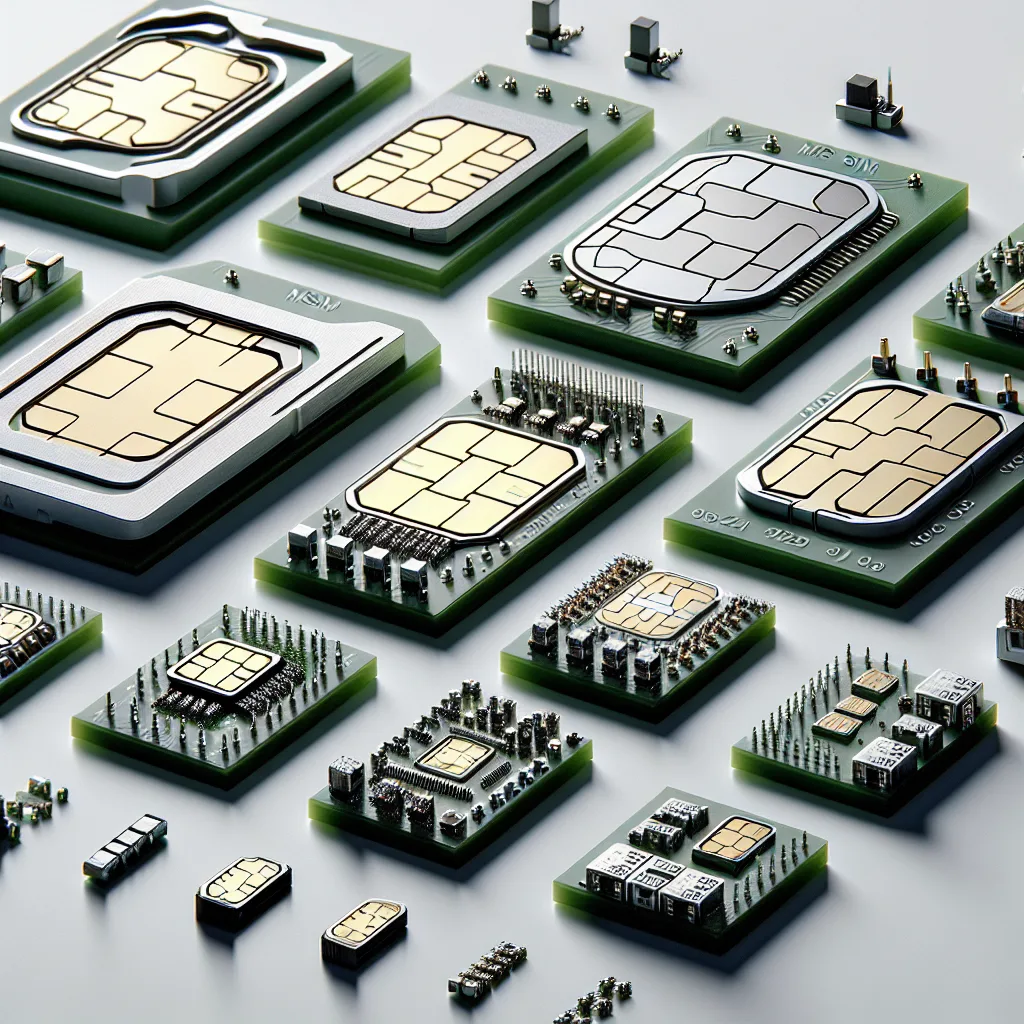
Choosing the appropriate M2M SIM form factor depends on device lifecycle requirements and deployment constraints. Devices with expected lifespans exceeding 10 years benefit from embedded sim integration. This eliminates mechanical wear points. Devices requiring periodic SIM replacement or upgrade may use removable form factors despite their reduced reliability. Space constraints in miniaturized IoT devices often dictate form factor selection. Embedded SIM cards consume significantly less space than removable alternatives. This enables smaller device designs and reduced manufacturing costs.Security Features in M2M SIMs
Security represents a critical difference between M2M SIMs and regular SIM cards. IoT devices often transmit sensitive data or control critical infrastructure. They require enhanced security measures beyond standard SIM card capabilities. M2M SIMs incorporate advanced encryption, secure boot processes, and tamper detection features. These protect against various attack vectors. Enhanced authentication protocols in M2M SIMs provide stronger device identity verification. These are compared to consumer SIM cards. These protocols use multi-factor authentication and certificate-based validation. They ensure only authorized devices can access network resources. This security level is essential for industrial IoT applications. Unauthorized access could compromise safety or operational integrity. Secure element integration in many M2M SIMs provides hardware-based cryptographic key storage and processing. This dedicated security hardware prevents key extraction. This works even if the main device processor becomes compromised. It maintains communication security in hostile environments.Threat Mitigation
M2M SIMs support specialized security features designed for unattended operation. Tamper detection circuits can disable the SIM card if physical intrusion is detected. This prevents unauthorized access to stored credentials. This capability is particularly important for devices deployed in unsecured locations. Remote security management allows administrators to update security policies and cryptographic keys. They can do this without physical access to IoT devices. This capability ensures that M2M SIMs can maintain security over their extended operational lifespans. This works as threat landscapes evolve.Cost and Billing Considerations
Cost structures for M2M SIMs differ from consumer SIM card pricing models. Regular SIM cards are typically bundled with monthly service plans. These are optimized for human usage patterns. M2M SIMs are often sold with specialized data plans. These are designed for device communication requirements. Volume pricing becomes significant for large-scale IoT deployments. Organizations deploying thousands or millions of IoT devices can negotiate bulk pricing for M2M SIMs. This significantly reduces per-unit costs compared to consumer SIM cards. These volume discounts reflect the different business models and operational costs associated with M2M connectivity. Data plan structures for M2M SIMs accommodate the unique traffic patterns of IoT devices. Low-volume plans support devices that transmit small amounts of data periodically. Burst plans accommodate devices that remain dormant most of the time but occasionally transmit large data volumes. Consumer data plans are not optimized for these usage patterns.Total Cost Optimization
The higher upfront cost of M2M SIMs compared to standard SIM cards is often offset by their extended operational lifespan and specialized features. Organizations must consider the total cost of ownership. This includes replacement costs, service disruptions, and maintenance requirements when comparing M2M and consumer SIM solutions. Billing flexibility in M2M connectivity allows organizations to match costs with actual usage patterns. Pooled data plans enable organizations to share connectivity allowances across multiple devices. This reduces waste and optimizes costs for variable usage scenarios.IoT Applications for M2M SIMs
Smart meters represent one of the most common applications for M2M SIMs. They connect utility infrastructure for remote monitoring and control. These devices require reliable connectivity over 15-20 year operational lifespans. They operate in challenging outdoor environments. M2M SIMs provide the durability and longevity required for these critical infrastructure applications. Fleet management systems use M2M SIMs to enable GPS tracking, vehicle diagnostics, and driver behavior monitoring. These applications require global connectivity as vehicles cross national borders. The multi-network capabilities of M2M SIMs are essential for continuous service availability. Industrial IoT applications leverage M2M SIMs for equipment monitoring, predictive maintenance, and process optimization. Manufacturing facilities deploy sensors throughout their operations. These monitor temperature, vibration, pressure, and other critical parameters. The environmental resistance and reliability of M2M SIMs ensure continuous data collection in harsh industrial environments.Emerging Applications
Smart city initiatives increasingly rely on M2M SIMs for infrastructure monitoring and management. Traffic sensors, air quality monitors, and parking systems require reliable, long-term connectivity. This supports urban planning and optimization efforts. The durability and global connectivity of M2M SIMs make them ideal for these widespread deployments. Healthcare IoT devices use M2M SIMs for remote patient monitoring and medical equipment connectivity. These applications require high reliability and security. This ensures patient safety and regulatory compliance. The enhanced security features of M2M SIMs are particularly valuable for these uses.Core Technology Differences
The difference between an m2m sim and traditional sim cards extends beyond simple connectivity features. M2M sims are purpose-built to handle the unique demands of machine-to-machine communication. Normal sims prioritize consumer-facing features like voice and text messaging. This fundamental difference in design affects everything from power consumption to network resilience.
When comparing regular sims and m2m sims, the most significant variations appear in their operational requirements and deployment scenarios. IoT and m2m applications demand connectivity solutions that can function on their own for years without human help. Consumer devices receive regular updates and maintenance. M2M deployments typically involve thousands of connected devices across diverse geographical locations. They require specialized network management capabilities.
Technical Specifications and Form Factor Considerations
The sim card size available for M2M applications includes multiple form factors beyond the standard consumer options. Industrial IoT sim cards often use embedded SIM (eSIM) technology or specialized form factors. These withstand extreme temperatures and vibrations. Devices with m2m connectivity require this type of sim card. Traditional consumer SIMs cannot reliably operate in harsh industrial environments.
Different types of sim cards serve distinct purposes within m2m and iot ecosystems. Each variant is optimized for specific use cases. An iot sim card designed for smart agriculture differs significantly from one intended for fleet management applications. Leading sim manufacturers now produce specialized variants. These address the diverse requirements of modern IoT deployments.
Choosing the right m2m sim involves evaluating multiple technical factors. These include coverage requirements, data allowances, and security protocols. M2M sim security features typically include enhanced encryption, secure boot processes, and tamper-resistant hardware components. These protect against unauthorized access. Organizations that use m2m connectivity must carefully assess these security capabilities. They should consider them alongside traditional performance metrics when selecting their m2m solutions.
Physical Durability and Environmental Resistance
A standard consumer sim operates within the comfortable confines of smartphones and tablets. M2m sims are built tough to withstand harsh industrial environments. Industrial-grade m2m sims endure extreme temperatures ranging from -40°C to +105°C. They resist vibration and maintain connectivity in conditions where regular sims would fail. This robust construction enables m2m sensors in mining equipment, agricultural machinery, and outdoor monitoring stations to operate reliably for years without replacement.
The distinction between m2m and standard mobile sim cards becomes most apparent when examining their operational lifespans and failure rates. Regular sims typically last 2-3 years in consumer devices. M2m sim cards are engineered for 10-15 year deployments in remote locations. Modern m2m sims support extended temperature cycling, enhanced memory management, and specialized firmware. This prevents the degradation common in standard sim types under continuous operation.
Advanced Connectivity Features for Industrial Applications
Multi-network m2m sims automatically switch between carriers to maintain connectivity. This is a critical feature that sets m2m sim cards apart from their consumer counterparts. These cards can access multiple network operators without manual intervention. This ensures that connected devices remain online even when primary networks experience outages. Remote sim provisioning allows operators to change network profiles and update security credentials over-the-air. This eliminates the need for physical SIM swaps in deployed equipment.
M2m sims connect machines across diverse industries through specialized protocols and data plans. These are optimized for low-bandwidth, high-frequency communications. M2m and iot applications typically generate small data packets at regular intervals. They require different network prioritization than the burst-heavy traffic patterns of consumer devices. The right sim card selection involves matching these specific traffic patterns with carrier capabilities and coverage requirements for optimal performance.
M2m sims are increasingly integrated with edge computing capabilities and enhanced security features. Standard consumer sims lack these. M2m and iot sim cards incorporate hardware-based encryption, secure boot processes, and tamper detection mechanisms essential for industrial deployments. Selecting the right m2m sim solution requires evaluating these security features. Consider them alongside network coverage, data plan flexibility, and long-term carrier support commitments.
Frequently Asked Questions
What makes M2M SIMs more durable than regular SIM cards?
M2M SIMs are built with industrial-grade components and specialized materials. They withstand extreme temperatures (-40°C to +105°C), vibration, and corrosive environments. They use reinforced contact points and enhanced memory chips rated for millions of write cycles. Regular SIM cards are designed for controlled smartphone environments with much shorter lifespans.
Can I use a regular SIM card in an IoT device instead of an M2M SIM?
While technically possible in some cases, using a regular SIM card in IoT applications creates significant risks. Consumer SIM cards lack the durability, temperature resistance, and longevity required for industrial deployments. They may also have data plan restrictions that make them unsuitable for automated machine-to-machine communications.
How do M2M SIMs handle global connectivity differently than standard SIM cards?
M2M SIMs support multi-IMSI technology and steered routing. This allows seamless connectivity across multiple countries and network operators without manual configuration. Global M2M connectivity includes specialized roaming agreements and network optimization features. These are not available with consumer SIM cards. This makes them essential for international IoT deployments.
What security advantages do M2M SIMs offer over regular SIM cards?
M2M SIMs incorporate enhanced encryption, secure element integration, and tamper detection features designed for unattended operation. They support advanced authentication protocols and remote security management capabilities. These protect sensitive IoT data and prevent unauthorized network access in ways that consumer SIM cards cannot match.
How long do M2M SIMs typically last compared to regular SIM cards?
M2M SIMs are engineered for 10-20 year operational lifespans in continuous operation. Regular SIM cards typically last 2-3 years with normal smartphone usage. This extended longevity is achieved through industrial-grade components and specialized manufacturing processes. These enable long-term IoT deployments without SIM card replacement.
What types of M2M SIM form factors are available for IoT devices?
M2M SIMs come in traditional removable formats (2FF, 3FF, 4FF), solderable versions for permanent circuit board attachment, and embedded sim solutions. These integrate directly into device hardware. The embedded sim format is increasingly popular for space-constrained IoT devices requiring maximum reliability and miniaturization.
What makes an IoT SIM different from regular mobile phone SIMs?
An iot sim is specifically engineered for machine-to-machine communication rather than human interaction. It features enhanced durability and extended operational lifespans. These sims are designed to function reliably in industrial environments with extreme temperatures, vibrations, and electromagnetic interference. These conditions would damage traditional consumer SIMs. IoT sims also include specialized network management features and security protocols tailored for automated device communication.
Can I use a regular SIM card in my IoT device instead of an M2M SIM?
While technically possible in some cases, using a traditional sim in IoT applications creates significant operational challenges and potential failures. M2M sims are designed with extended temperature ranges, enhanced durability, and specialized network features that regular consumer SIMs lack. The cost structure and data plans for consumer SIMs also make them impractical for large-scale IoT deployments where devices operate continuously.
How do I determine which type of SIM card my M2M project requires?
Selecting the appropriate sim card designed for your specific application depends on environmental conditions, data requirements, and deployment scale. Consider factors like operating temperature range, expected device lifespan, and whether your devices will remain stationary or mobile. IoT sims with specialized features like global roaming, extended coverage, or enhanced security may be necessary. This depends on your project's technical requirements.
What are the main advantages of using dedicated M2M SIMs over standard options?
Dedicated M2M SIMs offer superior reliability, specialized billing structures, and enhanced management capabilities compared to consumer alternatives. These specialized SIMs provide better network prioritization, extended coverage options, and centralized device management platforms. These are essential for large-scale IoT implementations. The enhanced durability and security features of M2M SIMs also reduce maintenance costs and minimize security vulnerabilities in industrial applications.
What makes M2M SIM cards more durable than regular SIM cards?
Industrial-grade m2m sims feature reinforced construction with wider operating temperature ranges (-40°C to +105°C). They have enhanced resistance to shock, vibration, and humidity. Regular sims are designed for consumer electronics. M2m sim cards use specialized materials and undergo extensive environmental testing. This ensures 10-15 year operational lifespans in harsh conditions.
Can M2M SIM cards work with multiple cellular networks automatically?
Multi-network m2m sims can automatically connect to different carrier networks based on signal strength and availability. This feature is not found in standard mobile sim cards. Remote sim provisioning enables network switching and profile updates without physical access to the device. This capability ensures continuous connectivity for critical m2m and iot applications even during network outages.
How do data requirements differ between M2M and consumer SIM cards?
M2m sensors typically transmit small data packets frequently rather than the large file transfers common with standard consumer sim usage patterns. The distinction between m2m and regular sim types includes optimized data plans. These are for low-bandwidth, high-frequency communications required by industrial monitoring systems. M2m and iot sim cards often include specialized pricing structures and network prioritization for these unique traffic patterns.
What should I consider when choosing between different SIM types for industrial projects?
Selecting the right sim card involves evaluating environmental requirements, network coverage, and expected device lifespan for your specific deployment scenario. Modern m2m sims support advanced features like over-the-air provisioning and multi-carrier connectivity. These may be essential for remote installations. Consider whether your application requires the enhanced durability and specialized capabilities that set m2m sim cards apart from standard options.
Conclusion
M2M SIM cards deliver specialized connectivity for industrial IoT applications that consumer SIMs cannot support. Their enhanced durability (10-20 year lifespans versus 2-3 years), global multi-network capabilities, and advanced security features make them essential for successful IoT deployments. Organizations should evaluate their specific environmental conditions, security requirements, and operational timelines. This helps determine whether standard SIM cards suffice or if M2M SIMs are necessary for reliable long-term connectivity.Related Articles
Industrial-Grade SIM Cards: Built for Extreme Environments
Industrial-grade SIM cards built for extreme environments give critical connections for iot devices placed in harsh conditions. Regular consumer SIM car...
Private APN for M2M: What It Is and Why You Need One
A private APN for M2M communication is a critical infrastructure choice. It can make or break your IoT deployment. Public internet connections might see...
Multi-Network Roaming for M2M: Steered vs Non-Steered SIMs
Multi-network roaming for m2m steered vs non-steered sims is a key decision for companies using iot solutions across different regions. The main differe...